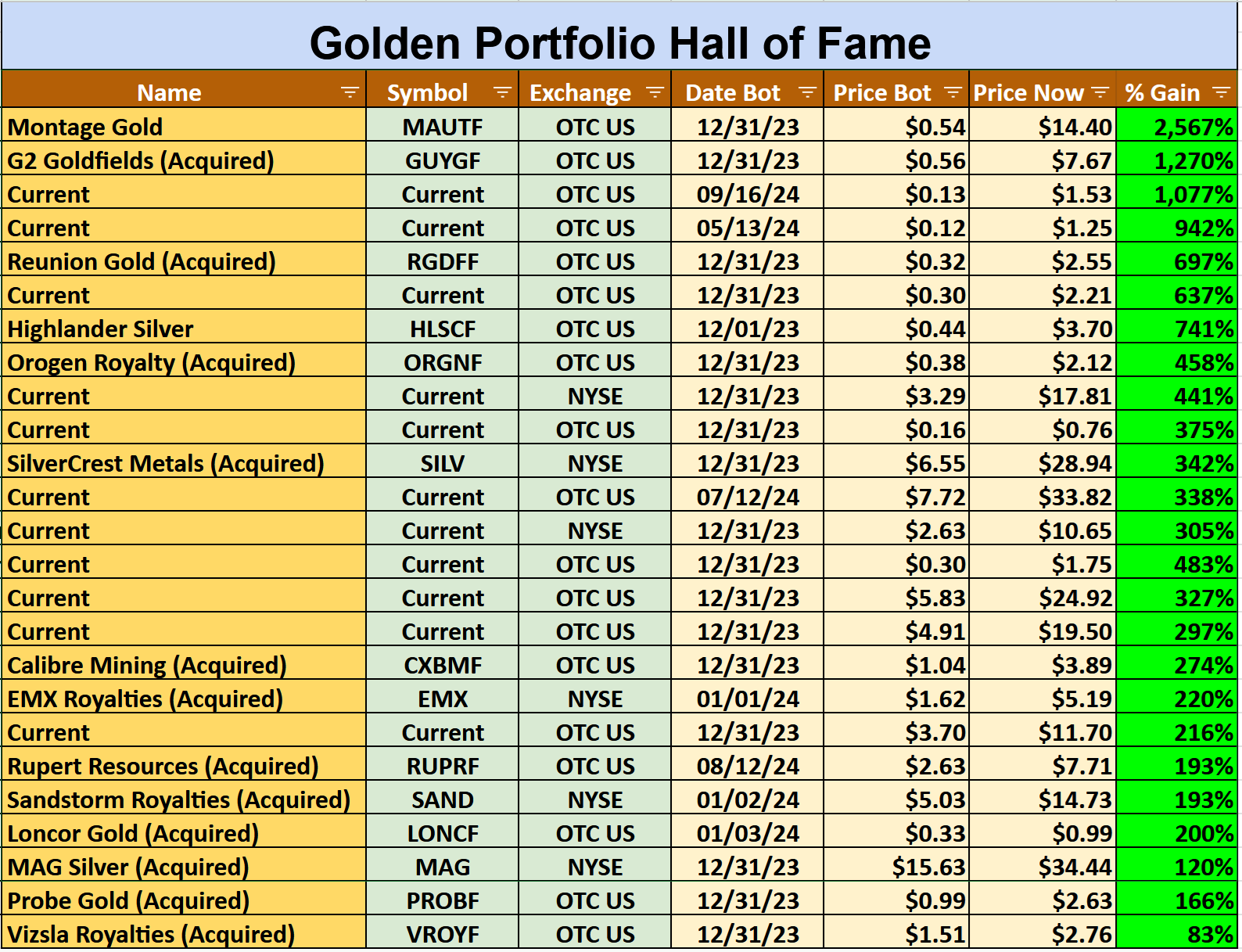
Sometimes politicians say the quiet part out loud – and I don’t think it’s controversial to say President Donald Trump is an all-time champion of amplifying the quiet part more frequently and louder than anyone.
On September 28, 2026, Trump had an interview with Time Magazine, and in the middle of it – almost as an off-hand comment, he proclaimed:
“You know, inflation. Certain levels of inflation will also pay off that debt very rapidly. Very rapidly.”
Of course, the Time interviewer didn’t dig any further, moving on to press Trump about the mid-terms.
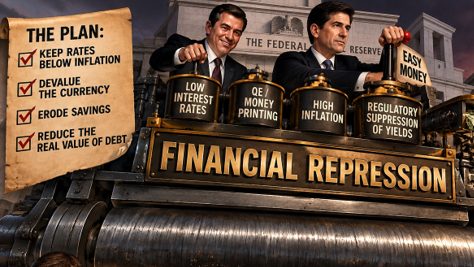
In economic circles, the strategy of purposely pursuing inflation in order to whittle away at debts is known as “financial repression.”
You’ve probably heard this phrase mentioned but might not know exactly what it means.
Here’s how it works: financial repression occurs when governments keep their bond yields below the rate of inflation.
Anyone who owns bonds/currency sees their purchasing power depleted. Over a long enough time frame, the repression acts as a wealth transfer from bond and currency holders to fund debt.
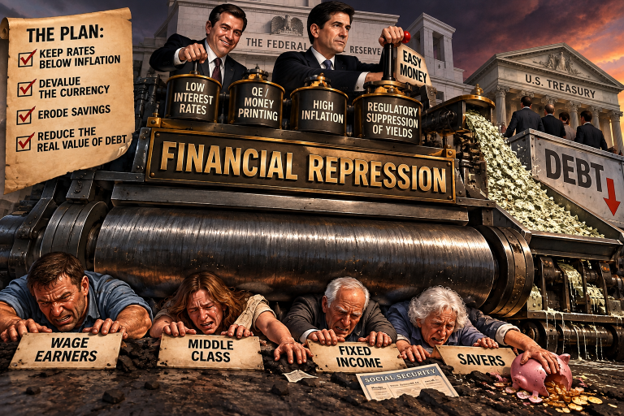
The flipside: people who hold assets that hold value during inflation tend to come out on top. This strategy also tends to help debtors as they see their debts inflated away while the assets they own (bought with debt) appreciate.
If it’s so easy, you might be wondering why officials running the US Treasury, Federal Reserve or Presidents over the past 50 years haven’t used this tool to mitigate large and growing debts.
There are a few drawbacks… and the biggest one is that inflation without rising wages is how you get a greatly reduced standard of living for anyone who earns a wage.
At a basic level, a policy of financial repression is choosing to hurt people in order to balance the books without having to go through the messy business of cutting spending or raising taxes.
People notice when food, energy, medicine, housing and education grow increasingly unaffordable. That’s real human suffering.
Another problem is that people on fixed incomes get crushed. By the time you retire, the preference is to hold an increasing share of your retirement funds in safer assets – like bonds. But bonds are the very asset being repressed. So you either watch your nest egg get squeezed til the shell breaks, or you have to put it into riskier assets.
As I write this, twitter is filled with retirement or near-retirement age people asking “why wouldn’t I just put a million dollars of my net worth into 30-year US Treasury bonds at 5.6% and collect the $56k in annual interest?”
The answer is: “you will get eaten alive by inflation and by the time you notice it will be too late to do anything about it.”
Also, the whole scheme doesn’t work very well if you let entitlement spending continue to keep pace, so you have to repress social security and medicare spending too.
And a third and potentially most disastrous problem with financial repression: maybe it won’t even work.
If you repress bondholders too hard, they won’t buy your bonds. Yields will continue to rise along with interest expense, the Fed will have to step in and buy more and more bonds – inflation will soar but so will spending and you won’t have the effect of whittling down debt.
People will buy something like gold, maybe – which they know can not be fiddled with by people in government offices who apparently don’t care if your life savings gets slowly wiped away.
Trump’s analysis of “a certain level” of inflation being the trick is correct. But the Fed is either unwilling or unable to even hit its target inflation rates, with a track record far below the Mendoza line.
The idea that Trump, Bessent and Warsh even know what that perfect level of inflation to wipe out debt would be is undermined by the fact that monetary policy leadership has rarely been able to hit such targets.
What’s clear: Trump intends to pursue this goal of inflating the debt away.
Even more importantly, there really isn’t anyone in Congress serious about fighting him on it. Inflation is bipartisan and has been for decades.
Forget what politicians say about spending: both parties have overwhelmingly chosen inflationary policy. They’re not about to stop now.
And to the extent that the Fed tries to fight inflation with higher rates – it’s fighting a losing battle.
Even with the Treasury and the Fed buying bonds to lower the longer duration yields, those same yields have done nothing but go up.
Yields are at 24-year highs. The retail investor active today might not have even been alive when yields were at this level. Most of the rest of them probably don’t remember.
Still, the market appears to be ignoring the bait to buy Treasuries. Gold has entered a sustained correction, down 7% over the past month, but it’s still well above where it was a year ago – when rates were 25% lower.
We could still have another leg down for gold – but over the long term, it’s going to do its job, especially if the financial repression regime continues. It may be that Trump et al eventually get rates down – and if that happens, gold will be primed to soar.
Have a great weekend.
Best,
Garrett Goggin, CFA, CMT
Lead Analyst and Founder, Golden Portfolio